
|
Customer: Watercare Services Ltd Contract: Construct Location: Queen Street, Auckland   |
Fast Facts:
|
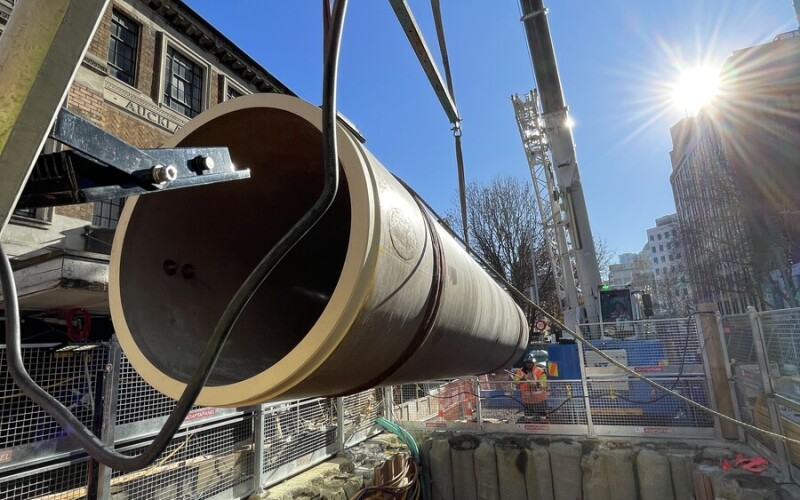
For the first time in New Zealand, a Direct Pipe® micro-Tunnel Boring Machine (mTBM) and traditional pipe jacking methods were used to install Glass Reinforced Plastic (GRP) pipes in a single drive.
We utilised two different tunnelling systems, doubling down on innovation to install a new pipeline for the Queen Street Wastewater Diversion Project in Auckland, New Zealand. On the project, we managed the tunnelling scope for lead contractor Fulton Hogan and client Watercare to construct a 570-metre-long wastewater pipeline in the city centre under Queen Street.
Tunnelling was the ideal construction method for this project as work could be carried out underground via three small shafts, avoiding the need to dig trenches in the central city. The project team reviewed every detail of the temporary works, material selection and the tunnelling method - to reduce construction impacts as much as possible.
Direct Pipe® and pipe jacking – hybrid method
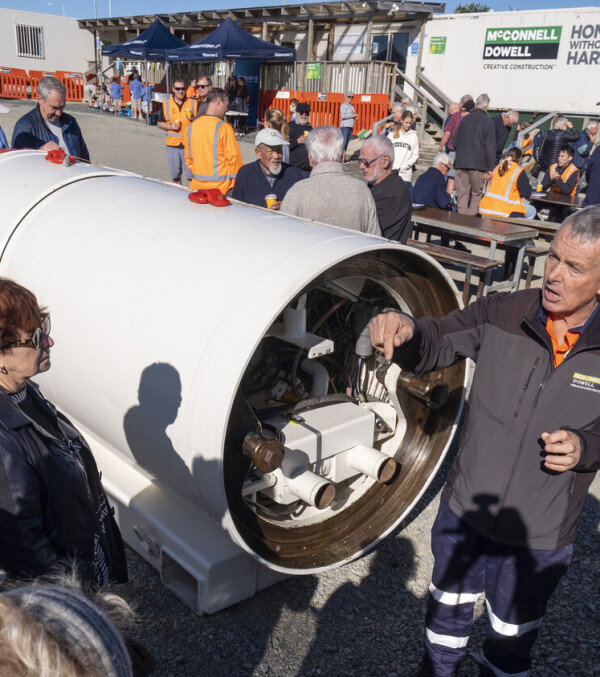
Our brand-new Direct Pipe® Herrenknecht micro-Tunnel Boring Machine (mTBM)'s precision guidance system and closed slurry system made her the best choice to install a pipeline of this length (570 m) under urban streets.
The mTBM is remotely controlled from above ground and uses a gyrocompass, traditional surveying and sensors to navigate underground. Spoil from tunnelling is pumped from the machine head, which reduces the pressures required and risk.
The Direct Pipe® system typically uses pipe thrusters and a continuous pipe string, which requires a long shaft setup. The space constraints in the city ruled out a long shaft setup, so the team investigated using traditional pipe jacking methods to keep the shaft sizes smaller, and from this, the hybrid method was devised.
Staged installation
The mTBM is 16.6 metres long when assembled, so a staged installation was planned to keep the shafts as small as possible; this approach also reduced cost.
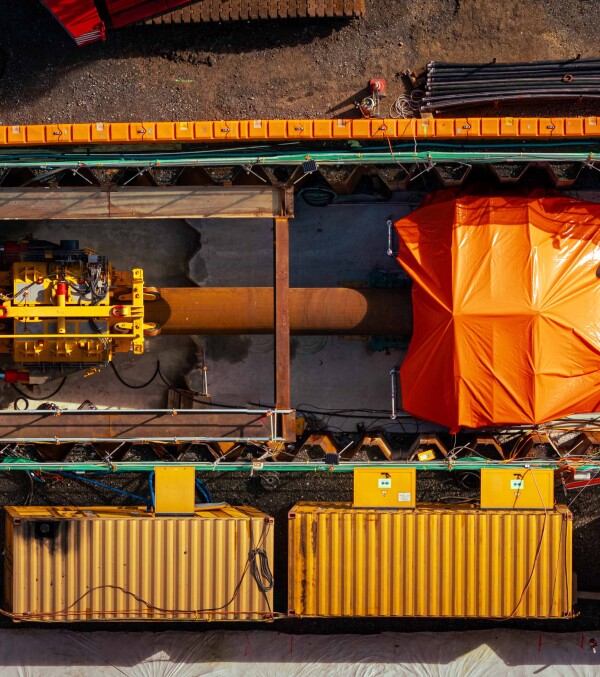
The launch at the Mayoral Drive shaft (11 m x 5 m) involved lowering the first three sections or ‘cans’ (9 m) of the mTBM into place and connecting them. The machine then tunnelled forward, so the remaining cans (7.6 m) could be lowered into place and connected behind it. Staging the assembly and using a pipe jacking cradle shortened the shaft by 6 m, enabling more road to be retained for traffic and access.
Moving Services Underground
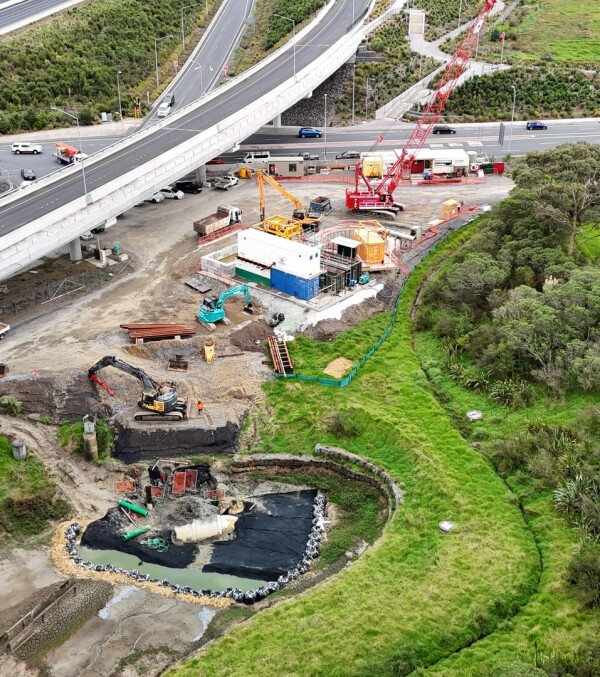
The slurry system and separation plant, which collects, pumps and processes the excavated material from the mTBM, was set up in a carpark off Greys Avenue behind Queen Street. A small shaft was excavated in Greys Ave, and the tunnelling services from the mTBM in the Mayoral Drive shaft were installed underground to the Grey Ave shaft, where they connected to the separation plant.
Locating the services under the pavement on Queen Street significantly reduced risk and inconvenience for pedestrians and cyclists.
Single pipe solution
Glass Reinforced Plastic (GRP) pipes are strong and can withstand the high pressures required for pipejacking. They are also durable and corrosion-resistant, designed to stand up to the rigours of transporting wastewater, making them ideal for sewer pipelines.
This project was the first time that GRP pipes had been installed by a Direct Pipe® mTBM and pipe jacking in a single drive, in New Zealand.
Traditional tunnelling uses a two-pipe system. Reinforced concrete (RC) jacking pipes are installed to create the tunnel, and a smaller diameter service pipeline, able to transport the wastewater, is installed inside as a liner pipe and then grouted into place.
GRP pipes combine the strength of the RC pipes and the corrosion resistance of plastic, making them an ideal, cost-effective alternative. Being able to install the pipeline using one type of pipe in a single drive halved the amount of work required and reduced the programme.
Tunnelling
The team completed the tunnelling scope in three short months.
After mobilising to the site in April 2025, we began tunnelling in July 2025. There were some initial challenges adapting processes to the new GRP pipes and getting the two tunnelling systems working together, but by the second half of the drive, the team was achieving outstanding productivities.
The first 353 m drive from a shaft at the corner of Queen Street and Mayoral Drive to the intermediate Wellesley Street shaft was completed on 17 September 2025.
At the Wellesley Street shaft, the mTBM cutterhead was replaced with a new head designed to tunnel through the basalt rock expected in the last 217 m.
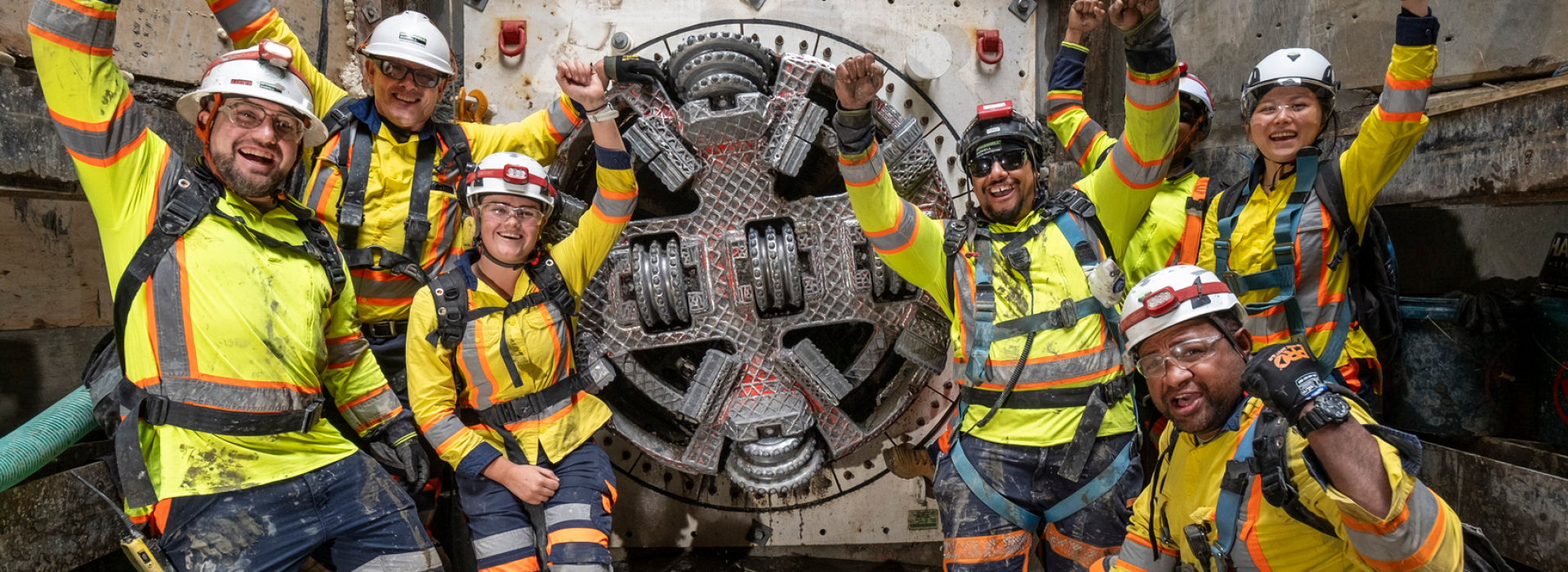
The mTBM completed tunnelling, breaking through into the Victoria Street shaft on target and on time, on 15th October 2025.
Once the machine had progressed as far forward as possible (the Ōrākei sewer main crossed through the shaft), the first can was detached and lifted out, and the other sections followed in sequence.
The project was completed on time, with zero Lost Time Injuries (LTIs) and zero customer complaints.
The new pipeline for the Queen Street Wastewater Diversion project will increase network capacity, allowing for population growth, improve resilience and reduce wastewater overflows for a cleaner Waitematā Harbour.
The project is part of Watercare's 10-year $13.8 B infrastructure upgrade programme.