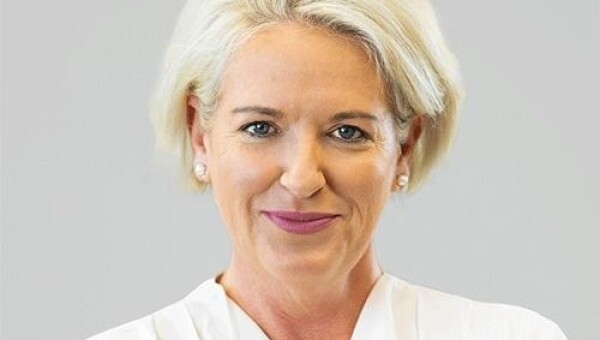


Natasha Manley, Executive General Manager of our Project Management Office, recently sat down with Inside Construction magazine to explain our approach to risk managemement. Here's the article...
McConnell Dowell is advancing a more mature Project Management Office model aimed at reducing portfolio volatility and embedding consistency across projects.
Every contractor talks about governance, but fewer articulate how it operates at portfolio level, shaping behaviour before a shovel hits the ground and tempering risk appetite when optimism runs high.
Natasha Manley speaks plainly about the task in front of her. As executive general manager of McConnell Dowell’s Project Management Office (PMO), she is not building a back-office reporting function. She is constructing a risk and governance engine that influences how the company bids, mobilises and delivers complex infrastructure across multiple geographies, contract models and cultures.
Her language is pragmatic. The ambition is structural.
When Manley stepped into the role just over a year ago, the priority was alignment. Many organisations have PMOs, but they all perform different functions. McConnell Dowell’s version is deliberately hybrid. It holds functional ownership of core project management disciplines while also acting as the organisation’s second line of defence for governance and assurance.
“What I have been trying to do with this is recalibrate everyone to some real, basic, consistent terms, approaches and practices,” she explains.
That recalibration has required a return to fundamentals, anchored in the principle that consistency precedes capability.
Without a shared language and baseline standards in planning, cost control, risk, procurement and plant management, complexity amplifies volatility. With it, complexity becomes manageable.
“Making sure that the fundamentals of project management are understood consistently, but simply, is critical,” says Manley. “Get the basics right, ensure they are rock solid, and then you can elevate.”
Rather than layering sophistication over fragmented practice, the PMO has focused on stabilising foundational elements first. From there, scale can be applied appropriately. A small turnout in the Pacific does not require the same governance intensity as a $700 million pumped hydro project, yet both must operate from the same defined base.
That balance between scalability and consistency is what begins to reduce portfolio volatility. It also reframes the PMO’s role. Instead of intervening reactively on distressed projects, the function seeks to influence risk exposure at inception.
Risk before revenue
In complex infrastructure, certainty is often invoked as a goal. Manley challenges the premise: “It is not about certainty. It is about identifying risk and opportunity, and understanding threats and what may affect you.”
The PMO’s biggest shift over the past 12 months has occurred at tender stage. Bid teams are optimistic by design, with subject matter experts assembling compelling cases to win work. The PMO provides counterbalance.
Having worked through diffcult projects, the team interrogates assumptions and surfaces lessons that may not be baked into bids. The organisation is overhauling its risk management processes from tender onwards, embedding portfolio-level thinking into front-end decisions.
A newly launched risk appetite rating tool assesses prospects against 13 distinct risk categories. This is not a compliance exercise but a structured reflection of corporate appetite, supporting business development teams in determining whether opportunities align with strategy, and if pursued, what mitigation measures must accompany them.
“This is about corporate appetite at portfolio level,” says Manley. “Across construction companies, instinct often drives decisions rather than data. We are implementing a data-driven basis to understand our risk profile at business unit and portfolio level. If we are loading up too heavily on high-risk work, we can rebalance. If we are too conservative, we may stretch in alignment with strategy.”
This portfolio perspective also introduces behavioural insight, as the way teams interact with dashboards and risk data begins to reveal patterns. Because projects are delivered by people, the PMO’s data infrastructure functions as both a governance tool and a cultural lens.
“This risk-based decision-making tool is intentionally broad, considering business risk and its downstream operational impact,” says Manley. “It bakes lessons learned back into our systems, informing lifecycle reviews.”
Three lines of defence
At a structural level, McConnell Dowell now operates with three lines of defence for governance and assurance. The first sits within the business units themselves, applying procedures and ensuring compliance. The third is internal audit, operating under established audit standards.
The PMO occupies the second line of defence. Its mandate is not to police, but to interrogate genuine project health.
“We provide an assurance function for the board, the business and the CEO, insofar as we look at whether the project is as healthy as it appears. Sometimes on the surface it might look good, but when you go in with experience, you can see there may be things to improve,” says Manley.
“We might identify that a project could finish two months early and present an opportunity, or that it could finish two or three months late, requiring early intervention.”
Assurance reviews are embedded across the project lifecycle, from start-up through early progress and at intervals aligned to risk profile. Recommendations are logged and tracked, with any unresolved actions escalated to the managing director to ensure explicit accountability.
Governance is not paperwork but targeted intervention at leverage points that materially influence success or failure. Effectiveness may be measured in time and dollars, but Manley also emphasises behavioural and cultural indicators. Site condition, discipline and leadership presence are all signals.
“We check whether previous recommendations were closed out and whether they improved outcomes,” she says.
“If not, we reassess. The difference is the cyclical, risk-based and targeted nature of our new assurance regime.”
The infrastructure required to support this approach is increasingly digital. Project health checks, planning and scheduling trackers, procurement and plant data, financial forecasts and risk assessments feed into consolidated dashboards.
Metrics are then refined for executive and board relevance, recognising that not every data point warrants leadership attention. The task is to isolate those that signal trajectory change or behavioural drift.
Artificial intelligence (AI) is also being deployed selectively to accelerate training and process dissemination. With around 60 projects and up to 20 tenders per month, in-person training can be impractical. AI-generated scripts, video modules and avatar-based walkthroughs allow rapid scaling of education, with expert oversight maintaining accuracy.
Transparency and accountability
Across projects and processes, transparency is an operational condition. “People do not like to be blindsided,” says Manley. “Transparency is fundamental. If you know something is an issue, you can deal with it.”
The PMO has invested in training senior management to interpret planning and performance data consistently. Indicators that once required specialist interpretation now prompt informed questioning at leadership level. If cost codes drift from schedules or forecasts fluctuate erratically, those patterns trigger scrutiny.
Over time, this shared literacy reduces reliance on central oversight, with leaders internalising the signals. This is where the PMO’s evolution into a strategic engine becomes most evident. It is not solving problems on site. It does not provide bench strength to rescue distressed projects. It calibrates appetite, monitors concentration risk and injects governance into front-end decision making.
“We are still in our infancy as a PMO,” says Manley. “There is considerable scope for what we could do.”
Over time, the intent is for the PMO to position itself as peer support to managing directors and core functions, connecting operational leadership and corporate disciplines such as HR, strategy, IT and finance.
“Our focus is on providing value to the business units, the CEO and our customer. If we are not delivering insights that help them improve profitability or identify issues early enough to intervene effectively, then we need to reassess what we are doing,” says Manley. “It ultimately comes back to a simple question: how do we help the business perform better and generate sustainable profit?”
A mature PMO does not eliminate risk, because infrastructure delivery always involves uncertainty. What it does is surface exposure early, calibrate portfolio risk, align behaviours with data and embed cyclical assurance that stabilises governance consistency across projects.
As McConnell Dowell’s experience demonstrates, this requires cultural change as much as process redesign, anchored in shared language, structured metrics, informed leadership questioning and the discipline to recalibrate before volatility escalates.